


The Evolution of Hinjewadi: From IT Hub to Residential Micro-Market
By Life Republic Editorial Team | Published: October 30, 2025 | Updated: October 18, 2026
Market Trends And Analysis
Read Time: 8 min
Table of Content
Hinjewadi's growth has been shaped by the expansion of Pune's IT economy. What began primarily as an employment district around the Rajiv Gandhi Infotech Park gradually attracted housing, retail, schools, healthcare and larger residential developments across the surrounding West Pune corridor.
This guide traces that evolution: how employment growth influenced residential demand, how surrounding neighbourhoods developed, and how Hinjewadi became both a workplace destination and a residential micro-market.
Hinjewadi's Evolution at a Glance
| Stage | What Changed |
|---|---|
| IT-led development | Rajiv Gandhi Infotech Park, developed by MIDC from the mid-1990s, establishes Hinjewadi as a major employment location |
| Employment expansion | IT and ITES campuses across three developed phases increase the daily workforce in the corridor |
| Residential growth | Housing expands in Hinjewadi, Wakad, Marunji and surrounding areas to serve the growing workforce |
| Social infrastructure | Schools, hospitals, retail and dining expand alongside residential demand |
| Larger communities | Integrated townships add broader residential formats and shared infrastructure within a single masterplan |
| Transit evolution | Pune Metro Line 3 is adding a mass-transit connection toward central Pune; 17 of its 23 stations had safety clearance at the latest reports |
Figures for the park differ by source. The Hinjawadi Industries Association describes about 700 hectares (roughly 1,730 acres) of MIDC land set up in the mid-1990s with more than 3 lakh employees; Wikipedia, Hinjawadi lists about 2,800 acres, over 800 companies and roughly 2.4 lakh people commuting each day. Phase 3 lies near Maan village in Mulshi taluka. Updated October 2026.
How Did Hinjewadi Begin as an IT Hub?
Hinjewadi's transformation began in the mid-1990s, when the Maharashtra Industrial Development Corporation (MIDC) developed the Rajiv Gandhi Infotech Park on what was largely agricultural land roughly 20 km west of central Pune. The park was built out across three phases over the following decades, each adding office space, roads and civic infrastructure.
Early tenants were primarily IT and ITES companies drawn by MIDC-allocated land and Pune's growing reputation as a technology and engineering talent base. As Phase 1 filled up, development extended into Phase 2 and Phase 3, gradually expanding the employment footprint further into Hinjewadi and neighbouring Marunji.
How Did Employment Growth Change the Area?
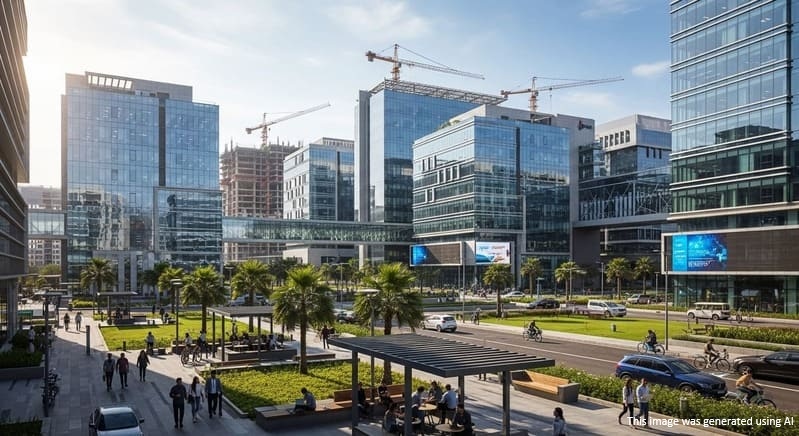
As the Infotech Park's phases filled with IT, ITES and technology-adjacent companies, Hinjewadi grew into one of Pune's largest single-site employment corridors. The scale of daily commuting into the park, from across Pune and its western suburbs, became one of the defining features of the area, shaping everything from road planning to the type of housing that eventually came up around it.
Why Did Residential Development Follow Hinjewadi's IT Growth?
The link between Hinjewadi's employment growth and its residential development is straightforward: as more people worked in the corridor, more of them wanted to live close to it.
Employment concentration
A large, steady workforce created sustained housing demand within a short commute of the Infotech Park.
Commute considerations
Employees working long IT-sector hours placed a premium on cutting commute time, favouring housing in Hinjewadi and adjoining areas over commuting in from further across Pune.
Developer response
Residential developers responded with a mix of standalone apartment projects, row houses and, later, larger integrated townships.
Social infrastructure
As the residential population grew, retail, healthcare, education and daily-service businesses followed to serve them.
Neighbouring micro-markets
Growth wasn't contained to Hinjewadi alone. Wakad, Marunji and other adjoining pockets became part of the same residential ecosystem.
Hinjewadi and the Wider West Pune Residential Corridor
Hinjewadi, Wakad and Marunji are often discussed together, but they're related, distinct micro-markets rather than one place.
Hinjewadi is the employment core, home to the Rajiv Gandhi Infotech Park and the IT/ITES companies within it.
Wakad is an established residential and commercial neighbourhood bordering Hinjewadi, with its own retail and social infrastructure that has grown alongside, and partly in response to, Hinjewadi's employment base.
Marunji is a residential growth corridor immediately adjacent to Hinjewadi, home to several large-scale residential developments, including Life Republic.
Together, these form the broader West Pune residential corridor that has grown up around Hinjewadi's IT economy.
How Did Social Infrastructure Develop?
As Hinjewadi's residential population grew, schools, hospitals, malls and everyday retail followed to serve it, a pattern typical of any employment-led residential corridor as it matures. For current details on schools, hospitals, shopping and daily life in the area, see our Living in Hinjewadi guide.
How Did Integrated Townships Change the Residential Landscape?
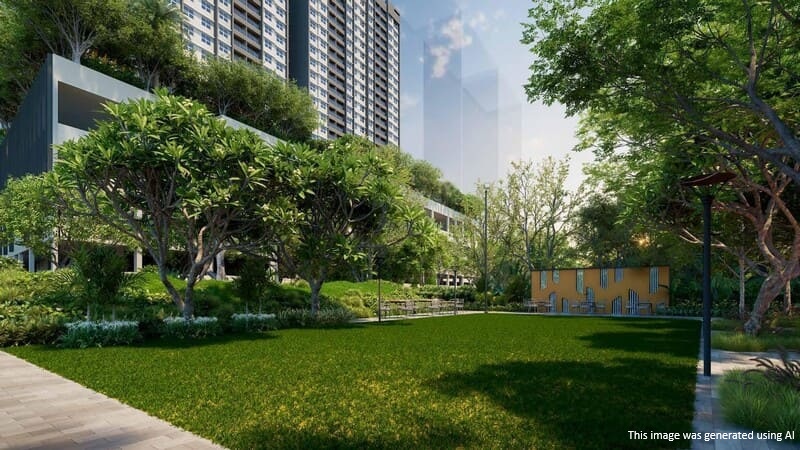
As Hinjewadi's residential market matured, development shifted from individual apartment buildings toward larger, master-planned communities that bundle housing with shared infrastructure, internal roads, schools, retail, open spaces and amenities, within a single development.
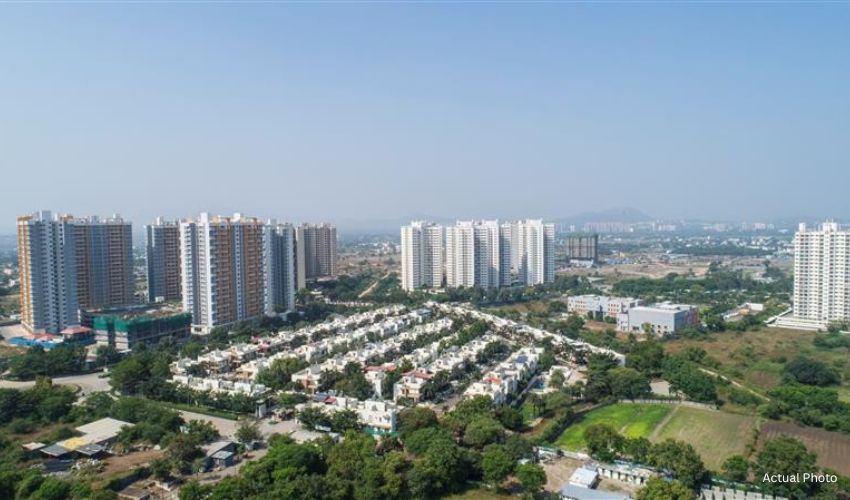
Life Republic by Kolte-Patil is one example of this shift: a 400+ acre integrated township in the Marunji-Hinjewadi corridor, bringing multiple residential precincts and housing formats within a larger masterplan. For details on its specific location and connectivity, see our Life Republic location and connectivity guide.
Other residential formats within the broader Life Republic portfolio are covered in Better Homes, and how Hinjewadi's townships compare with other large-scale developments across the city is covered in our Best Township in Pune guide.
What Is the Next Phase of Hinjewadi's Evolution?
Transport infrastructure
Pune Metro Line 3 is being developed to connect the Hinjewadi corridor with Shivajinagar. For current route, station and passenger-service information, see our latest Pune Metro Line 3 update.
Pune Metro Line 3 status, as of 30 September 2026. The Commissioner of Metro Rail Safety cleared the first 12 stations, Maan to Balewadi, for passenger operations on 23 July 2026 (Metro Rail News). Five more stations were reported cleared on 23 September 2026, which brings the number cleared to 17 of 23 (Swarajya, 30 September 2026). Passenger service had not started, and the launch was waiting for an inauguration date while the election code of conduct applied. Check the Pune Metro Line 3 update for the current position.
Residential maturity
As the area matures, the question shifts from simply adding housing to improving liveability, roads, drainage, public transport and civic amenities that keep pace with the population already there.
Employment-residential balance
The long-term challenge for Hinjewadi is managing employment growth, housing, transport and civic infrastructure together, rather than any one of these in isolation.
FAQs
1. How did Hinjewadi develop into an IT hub?
Hinjewadi developed into an IT hub after the Maharashtra Industrial Development Corporation (MIDC) built the Rajiv Gandhi Infotech Park here from the mid-1990s onward, across three phases. IT and ITES companies moved in as each phase was developed, turning what was largely agricultural land into one of Pune's largest employment corridors.
2. What is the Rajiv Gandhi Infotech Park?
The Rajiv Gandhi Infotech Park (RGIP) is the IT/ITES business park in Hinjewadi developed by MIDC. It's spread across three phases and houses a large number of IT, ITES and technology-adjacent companies, making it one of Pune's primary employment hubs.
3. Why did residential development grow around Hinjewadi?
Residential development grew around Hinjewadi mainly because of proximity to jobs. As the Infotech Park's workforce grew, demand followed for housing within a manageable commute, which developers met with apartments, row houses and, later, larger integrated townships.
4. Which residential areas developed around the Hinjewadi employment corridor?
Hinjewadi's own residential pockets grew alongside neighbouring areas like Wakad and Marunji, separate micro-markets that are part of the same broader residential corridor that developed around the IT park.
5. How has social infrastructure in Hinjewadi changed?
As Hinjewadi's residential population grew, schools, hospitals, malls, dining options and everyday retail expanded to serve it, a natural progression as any employment-led area matures into a residential one.
6. What role do integrated townships play in Hinjewadi's residential growth?
Integrated townships bundle housing with shared infrastructure, roads, schools, retail and open spaces, within one master-planned development. Life Republic in the Marunji-Hinjewadi corridor is one example of this format taking shape in the area.
7. How could Metro Line 3 affect Hinjewadi's connectivity?
Pune Metro Line 3 is designed to connect the Hinjewadi IT corridor with Shivajinagar, adding a mass-transit option alongside existing road connectivity. For the latest route, station and service details, see our Pune Metro Line 3 update.
8. What is Hinjewadi like to live in today?
Today, Hinjewadi is a mixed employment-and-residential micro-market with schools, hospitals, malls and everyday retail alongside its IT campuses. For a detailed look at daily life, infrastructure and connectivity, see our Living in Hinjewadi guide.
Hinjewadi's story is really the story of an employment hub that grew into a residential one: jobs came first, and housing, infrastructure and townships followed. That evolution isn't finished. As the area matures, the focus is shifting from adding housing to supporting the infrastructure and connectivity that keep pace with everyone who already lives and works here.
9. Why has Hinjewadi grown as a residential area?
Hinjewadi's residential growth is closely linked to the expansion of Rajiv Gandhi Infotech Park and the housing demand around the wider West Pune employment corridor. The pace and character of development vary by pocket, so it is better understood as long term, employment led expansion than as a single fastest growing ranking.
10. What is Hinjewadi, Pune famous for?
Hinjewadi is best known for Rajiv Gandhi Infotech Park and its role as one of Pune's main IT and employment corridors. It has also grown into a large residential market for employees and their families.
Sources
The figures and dates in this guide come from the sources below. Updated October 2026.
- Hinjawadi Industries Association: about the Rajiv Gandhi Infotech Park
- Wikipedia, Hinjawadi: background on the park, its phases and the surrounding area
- PMRDA, Pune Metro Line 3: the official project page for the Hinjewadi to Shivajinagar line
- Pune Pulse, 15 September 2026: the reported first-phase stations and expected opening
Share this article


Qrious
2 and 3 BHK Flats at Qrious, Life Republic Hinjewadi
Possession: April 2030
RERA: Rera No: P52100079623